Showing posts with label art appreciation. Show all posts

20 February 2012

La inkopentristo

(A story about art, in Esperanto)

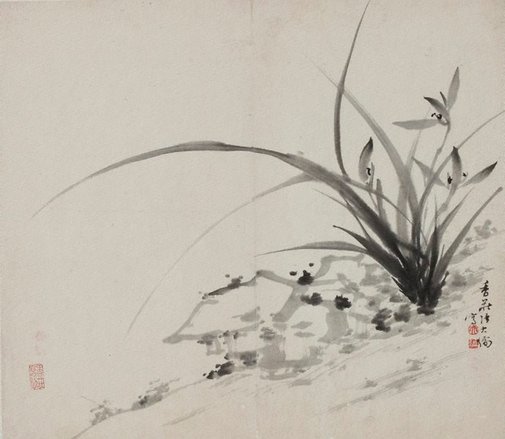
REN Xuda (Ĉinio) Orkideo 1809
Donaco de S-ro SydneyCooper 1962
Kolekto de Art Gallery of NSW, Sydney, Aŭstralio
Rakontisto: Iam en Ĉinio estis lerta inkopentristo, speciale famega por liaj figuroj de floroj, kiuj estis venditaj por tre altaj prezoj. Li havis amikon. Unun tagon la artisto kaj lia amiko paroladis.

Pentristo: Vi estas bonega amiko al mi dum multaj jaroj. Mi pentros por vi pentraĵon kaj donos ĝin al vi.

Amiko: Ĉu vere?

Pentristo: Jes, certe. Pentraĵon pri kiu, vi ŝatus? 

Amiko: Pri floroj, kompreneble.

Pentristo: Do, pri floroj ĝi estos.

Amiko: Dankon. Mi tre ekscitiĝas.

Pentristo: Ne dankinde.

Rakontisto: Semajno pasis kaj la amiko scivolis kiam la promesita pentraĵo estus preta, sed li diris nenion. Alia semajno pasis kaj ankoraŭ pentraĵo ne aperis. Tiam, post monato, la amiko demandis al la artisto:

Amiko: Pardonu min, mi ne riproĉas vin, sed ĉu vi memoras la pentraĵon kiun vi promesis al mi? 

Pentristo: Ho, kompreneble. Mi laboradis pri ĝi ekde mi promesis ĝin. Kiom da tempo daŭris? Ĉu tri semajnojn?

Amiko: Unu monaton.

Pentristo: Unu monaton, ĉu?

Amiko: Jes, sed ne gravas. Kompletigu ĝin kiam ĝi kompletos. Ne rapidu.

Rakontisto: Sed enkore, la amiko ja malpaciencis. Pasis alia monato – ankoraŭ ne pentraĵo. Pasis du pliaj monatoj. Fine, entute ses monatoj pasis. La amiko ne povis bridi sin. Li vizitis la pentriston ĉe lia domo.

Amiko: Saluton. Mi nur scivolas ĉu la pentraĵo estas kompleta.

Pentristo: Preskaŭ, preskaŭ. Fakte, mi kredas ke mi povas fini ĝin dum vi atendos. Restu ĉi tie; mi revenos.

Rakontisto: La pentristo iris en alian ĉambron kaj revenis post minuto kun papero, peniko, inkbastono, ŝtona bloko kaj akvo. Li instalis sin ĉe malgranda, malalta tablo. Li gutigis akvon sur la ŝtonan blokon kaj frotis ĝin per la inkbastono ĝis nigra inko aperis. Tiam, li mallevis la penikon en la inkon kaj metis ĝin super la papero. Li paŭzis momente... kaj ekpentris. Lia mano, kaj la peniko, moviĝis rapide kaj lerte. Post malpli ol du minutoj figuro de orkideo aperis sur la papero. Ĝi estas majstroverko.

Pentristo: Jen via pentraĵo.

Amiko (mirege): Sed, sed... vi atendigis min dum ses monatoj por ke mi ricevi la finitan pentraĵon, sed vi faris ĝin dum malpli ol unu minuto! Kial? Mi ne komprenas.

Pentristo: Sekvu min.

Rakontisto: La pentristo gvidis sian amikon en la alian ĉambron, sian atelieron. Tie, sur la granda labortablo kaj sur ĉiu muro estis pentraĵoj, entute centoj kaj centoj da pentraĵoj, kaj ĉiu estis figuro de orkideo.

Pentristo: Ĉiun pentraĵon mi pentris dum du aŭ tri minutojn, sed neniu estis sufiĉe bona por doni al vi. Sed mi sentis ke hodiaŭ mi estus preta, ke mi povus pentri la pentraĵon kiun mi deziris doni al vi.

Rakontisto: Do, la demando estas, kiel longe daŭris la kreado de la fina pentraĵo? Ĉu malpli ol du minutojn aŭ ses monatojn? Aŭ eĉ, la tutan vivon de la pentristo ĝis tiam? Vere, artisto ne povas krei sian milan artaĵon sen fini naŭcent naŭdek naŭ artaĵojn antaŭe.

19 November 2011

4P visits the Art Gallery: a blast from the past

The other day I was going through some boxes of children's drawings (all my children are adults now) and I came upon one of my daughter's exercise books from grade 4. I'm posting an excerpt here because it describes a school excursion to the Art Gallery of NSW. (It is exactly as written – no corrections.)
4P lerning to Look

tues 29th may  4p visits the art Gallery

The art Gallery is a place were you go to enjoy your self and thats what 4p did when they went to the art Gallery.

4p got the train at Tempe and got off at St James. 4p ate recess at Hyde park in front of a wishing fouwntane. After recess we went on the moving walk way. It was fun. We had to walk on the wet grass all the water skwerted up into our shoes. When we got to the art Gallery we went on a chair that went up and down when a man bangs down a hamer. Then 4p was split into three groups.

My dad took one group and two volintir gids took the two other groups. I was in my dads group of cours. There is lots of interesting thing to see at the art Gallery but your not aloud to touch. If you do touch you will get into BIG trouble. My dad and the two volintir gids talked about what the shapes the people in the painting would like and what colurse too. Dads group went down to the aberigenal exerbision then 4p had to leave. We had lunch on the bottom floor of center point then we went in the Queen Victoria bilding were mum took one group and miss poulos took the other. It was fun there to. Then the two groups met each other agen and we walked down to central station were we got on a train that would take us to Tempe station and we walked back up to the school.

07 November 2010

Who is Russell Aridsvalley?

Everyone’s heard of people with names that go with their jobs (eg Rev. Godwin). But the other day I was thinking of some artists whose surnames seem to suit their style of art. Here’s a list of artists where the surnames have been changed into words that have a very similar meaning. Can you work out who they are? (The first two should be pretty easy.)
  • Jeffrey Clever
  • Francis Hogmeat
  • Peter Ascending
  • Philip Oddity
  • Russell Aridsvalley
  • Sydney Yearn
Hints: 
They’re all represented in the collection of the Art Gallery of NSW.
All but one is Australian.
One is a photographer.

Sorry, there are no prizes, just a sense of smug satisfaction. :-)

Can you think of any more?

21 December 2009

How to engage the high school museum visitor

Recently, there was some interesting discussion on the museum-ed list about how to get through to high school students in a museum, in particular an art museum. Here are the messages, in order:

1.
While this art museum successfully attracts thousands of school children for its various “art looking” tours, and teachers report high degrees of satisfaction with their experiences, we find the docents are increasingly uncomfortable touring high school students. The biggest issue – the students won’t say anything! Can anyone recommend strategies for successful experiences for teenagers? Is it realistic to expect overt engagement and discussion? What advice can I give these docents who love the art, know so much, and have had such wonderful success engaging younger visitors?
Thanks for any help you can give us.

Carol S. Yost
Assistant Curator of Education
Memorial Art Gallery
Rochester, New York
2.
We have also found that high school students are very quiet. Over the years I have learned that quiet does not always mean disengaged. At this age level peer pressure is heavy and the fear of giving a wrong answer is intense. They also dislike being controlled by adults. Even some of our college students are reluctant to speak in a crowd on tours.

Our solution has been to offer a very different type of tour for high school students. After a minimal amount of time touring – an introduction of exhibitions or concepts, depending on the need of the teacher – we give the students time to look on their own. Often we include reflective projects/guidance – again depending on the needs of the teacher.

For example, a high school art class might be introduced to aesthetics/DBAE and then given a fun assignment that could be used as part of their writing portfolio. See below for some examples.

Disaster at the Beach
You are the curator of the Beach Museum of Art. The tornado siren goes off, you are in the galleries, and you have time to save one piece of art. Which one is it?

After the tornado is over the Director wants to know why you saved the piece – your job depends on your answer!

Some things to consider: The artist’s technical ability, the importance of the artist or the work, the message of the work, the historical value of the work, and the collections mission of the Museum.

Or

Creating an Ambiance with Art
You are a young artists who has just moved to New York City and are living in a one-room loft apartment. You have sold your first painting and have enough money to buy one work from the Kansas Artist Craftsmen Association exhibition.
Choose a piece and design your loft apartment around it.
Name the piece you will buy.
What other furniture will you have in the room – what style, what colors? What colors are the walls and carpet? What other artwork would go with your piece?
What book(s) would you have on the coffee table to go with your artwork?
What music would you have on the stereo to go with your artwork?
You are having friends over for dinner – plan a menu that would go well with your new artwork.

For an English Class:

Every Picture Tells a Story
You are an author; you are writing a book (it can be fiction or non-fiction) about American history between 1920 and 1950. You will need to title your book first and briefly explain what it is about. Then you need to choose a cover illustration for your book from the works on display in America Seen: People and Place. Inside the book jacket you credit the artist and artwork and write a brief essay about why you chose the illustration you did. Your essay should explain to the reader how the artwork relates to your book. You can include factual information about the artwork or you can discuss how the artist creates a mood or feeling that matches your book.
  • Book title and brief explanation:
  • Artwork and artist:
  • Book jacket essay relating the artwork to the book:
Kathrine Schlageck
Beach Musem of Art, Kansas State University
3.
We have found major success touring high school students when we let them talk about themselves and what they know. They have to form a bridge between their experience in the world and what they see in the museum. For example, let’s say we’re going to tour an exhibition about portraits. Before they even see one work of art, we might all sit down in a circle and have a conversation about portraits from their perspective (taking photos of friends, their Facebook profile pictures) and how those images communicate messages about the sitter and the portraitist. The docent should really be a facilitator for conversation, not a lecturer. We also establish at this time the expectations for the tour. We tell them that it’s not fun for us to just feed them facts, and unless they offer ideas and opinions the experience won’t be as interesting. There are no right or wrong ideas.

From here, it’s much easier for them to connect to works in the exhibition because they can draw from the initial conversation. We also incorporate strategies such as letting them choose the works we talk about, breaking up into small groups and reporting back, looking on their own, and other activities that put them in charge of their own museum experience. This age group requires a different approach than one used for younger students, but touring high schools students can be extremely rewarding if done right.

Lauren Fretz
Student Programs Coordinator
MFAH: The Museum of Fine Arts, Houston
4.
Below is an internal training document I and several education staff members at The Museum of Contemporary Art developed a few years ago. It's called Survival Strategies for Touring Teens (9 Do's and a Don't). Hope it’s helpful.

DO
1. Mentally prepare yourself for a lack of eye contact. Teens will generally not make eye contact with you, so don’t panic if you don’t see it. As you converse with them, let your eyes move around the group so no one feels singled out or stared at.

2. Prepare teens for what they will experience. Make sure you go over museum rules so teens know how to be successful visitors. Orient them to your general plan – that you will spend time concentrating on a few works you think will be interesting to them rather than describing each piece; that you will be asking them questions because you are really interested in their ideas, opinions, and questions.

3. Ask easy questions at the beginning just to get the conversation going. “What did you do before you came to the museum?” establishes your interest in the teens’ experience. “When I say the word fashion, what comes into your mind?” gets teens thinking about how to connect their own experiences to the exhibition.

4. Ask follow-up questions in a non-threatening way. I watched an educator smile and enthusiastically ask teens who giggled and called a video in the exhibition crazy and trippy, “What’s crazy about it?” “What’s trippy about this video?” The educator showed appreciation for their initial tentative comments and gently pushed them to explain further.

5. Mentally prepare yourself for silence. If no one answers a question you have just asked, spend a few moments looking at the work of art you are discussing. This models careful looking, and takes the pressure off the teens who might feel put on the spot.

6. Remember you are not a teen. You do not have to know about high school students’ popular culture or current slang to earn teens’ trust or respect. In fact, most attempts by adults to use slang or refer to pop icons ring pretty hollow with teens. However, even though you’re an adult, you don’t have to be seen as a classroom teacher or a parent either. Instead, draw on your own personal strengths. Your status as an artist and/or representative of the museum gives you a unique role with respect to teens – they may be looking at you as someone they might like to emulate. Let your enthusiasm, playfulness, and genuine interest in the teens come across.

7. Follow their interest. If teens show sudden interest in a work that is not in your plan, acknowledge their curiosity and interest by spending a bit of time there. Find out what drew their attention to the work of art and show enthusiasm for their observations.

8. Give them puzzles to solve. Teens like to be challenged to come up with solutions, not just answer questions that don’t seem to go anywhere. You can build higher-level questions into your tour (“What do architecture and fashion have in common?”), but cooperative learning can also be a great way to give students an idea to puzzle out. You might consider designing a worksheet for them to jot down their ideas and responses to one or two provocative questions. You can limit your cooperative learning exercise to one room, or to one question, but it can break the one-teacher-vs.-group-of-students dynamic of your tour into a bunch of mini-discussions where even quiet teens get a chance to participate.

9. Praise their involvement. At some point during the tour and at the end, tell the teens you appreciate something about what they’ve done – been very careful not to touch the works of art, observing the exhibition carefully, giving thoughtful opinions. Teens need rewards and respect.

DON’T
1. Lecture. No piece of information you can give is more important than the overall quality of the teens’ experience. Any sense that you are in lecture mode will result in an immediate turnoff. Their bodies will be there, but their hearts and minds will not.

Catherine Arias
Senior Manager Visitor Experience
MOCA: The Museum of Contemporary Art
5.
No one will be surprised to hear me say this, but VTS works well with middle and high school students. They will talk. They enjoy it. They want to. But two things are key: The image has to be compelling to them. It has to be interesting enough to pull them out of the stuff that makes teens hold back in front of grown ups not to mention their peers. Rights issues, relationships, war all pretty sure bets. If all you have up are abstractions, say, you can experience silence.

But the other issue is that the docent or other has to be able to smile and exhibit comfort in their own skin. Kids smell nervousness, or chilliness, or rigidity and hold back. They respond to genuine warmth and energy. As soon as one talks, and the docent paraphrases what s/he says in a thoughtful, respectful, neutral way, it's a lot easier for the next one to contribute.

I don't recommend VTS with adolescents unless the docent is pretty practiced at it and feels very comfortable with facilitation. But if they are skilled—practice with fifth graders—they can have a magical time with teens.

Philip Yenawine
6.
There have been some great suggestions. The alternative high school groups are my favorite.They need the freedom to choose what they respond to. Collage activities with newspapers on the day they visit are perfect to capture the day. We use a lot of sensory prompts, what does this work (that they have chosen) taste like, smell like, feel like (emotionally or if you could touch it) describe it to someone who is blind. Peer tours also work well if you have interns or volunteers that are of the same age. Looping videos of the artists themselves talking always impress. Journaling, sequencing, storyboarding based on a work (that they pick) can really get them going. We schedule these groups for as long as we can, 60–120 minutes! Repeat visits work well, every trimester so they build a deeper relationship really pays off. We work closely with the teachers who prepare and follow up based on the visit.

Nadra E. Haffar, MAAE
Education Curator
Nora Eccles Harrison Museum of Art
Utah State University, Logan, Utah
7.
I agree that this has been a great discussion about the key strategies to consider with high school students in the galleries. I agree with so much of what has been said. Keep the thoughts, hints, and strategies coming!

My best experiences with high school students are the ones in which I have very high expectations for the students and allow them some elements of freedom in choosing the works and issues we explore (or, more frequently, that they will explore in their own peer groups and then come back to share their discoveries and ideas with the larger group).

From my own teaching experiences, I have to disagree about the use of abstract artworks – I have had much more success having high school students engage with abstract works in the galleries. Once we create the comfortable, non-threatening environment for them to share their thoughts about these works, they really open up and make personal connections with the art. I've used different types of writing and creative response activities that utilize multiple modes of looking and thinking to open up the works, and the students run with it. I just recently brought a group of high school students through our special exhibition of Japanese Screens, and we ended with a short waka poetry activity with the contemporary, abstract screens – which was their favorite part of the visit (the process was great, and their poems were phenomenal!). Time after time, students leave telling us they now enjoy some of the modern or contemporary works that they previously would dismissed. I've had a bit less success with narrative and/or representational works.

Michael Murawski, PhD
School Services Director
Saint Louis Art Museum
8.
I know exactly what you mean when you say that high school students won’t say anything. I remember when I first started many years ago as a museum educator taking “discussion tours”, I would assume that the best approach to, say the topic “Australian art” was to start at the beginning (chronologically) and move through the galleries until we reached the most recent artworks. It often wasn't until we reached the more recent art, in particular abstract expressionism, that the students would "wake up" and start to respond. Of course, many of the responses were along the lines of “What's that meant to be?”, “What's so good about that?”, “How much did you pay for that?” and “My 6-year-old brother could do better than that!” :-) I found it a bit threatening at first, because I had assumed that it was my job to stand up for the artworks, the artists who created them and the curators who chose them. But when I relaxed a little, and acknowledged the students’ concerns and questions, I realised that the controversy was at least generating some “energy” in the tour and that, if I could somehow harness it, I could get the students engaged. So, as an experiment, I decided to start with one of these artworks (eg: Peter Upward, New reality 1960), let the students ask their questions and make their comments, then say something like, “OK, so how did art get to this point?”, and then we would go backwards in time until we reached the early stuff. It proved to be a successful strategy.

Another thing that helps is not to assume that the students will initially be interested in the same kinds of things as we are (as art museum people): art history, aesthetics, artists’ biographies, social history, painting techniques etc. Instead, I try to find ‘hooks’ to the things that most likely concern them, in particular emotional hooks. Eg: (food)... “If you could eat this painting, what would it taste like?” I think of this as like accessing their emotional reactions to the work of art via the “back door”. (Asking someone the plain question “How does this painting make you feel?” is unlikely to elicit a very useful response.)

For what it's worth, here are a couple of articles I originally wrote for (and presented to) IT/web audiences, but heavily based on my museum education experience:


By the way, I have really enjoyed all the other responses to your original email. :-)

Jonathan Cooper
Manager of information / website
Art Gallery of New South Wales
Sydney AUSTRALIA
9.
I also applaud the great insights and hints given here.

My one key strategy for touring teens has already been mentioned, that is to allow the teens to select works that interest them and focus on those for the tour. I almost always create some kind of a task for them to search the galleries on their own and select an art work that meets the criteria I have set and that attracts them. For example, I hand out a list of big ideas that artists explore in their work (such as beauty, story, identity, politics, fantasy, nature, conflict, justice, etc. – look at the Art21 episodes themes for lots of great big thematic ideas). I invite the kids to circle one big idea that they are interested in themselves and then look for a work that they think somehow relates to that idea. Then we go around to the works the kids selected for the rest of the tour.

And finally, I must say that like everyone else, teens are all different and, depending on their background (urban, rural, or suburban…), experience in visiting a museum, the dynamic of their school community, or whatever, they never react the same way twice. Be careful assuming that you know all teens after one – or one hundred – tour experiences. They surprise me every time!
My best advice is the same for any tour group. Be yourself, ask open–ended questions, and pay attention to the cues that you get from the group.

Susan Rotilie
Program Manager, School Programs
Walker Art Center
Minneapolis, MN
artsconnected.org
10.
I want to thank everyone who sent me ideas about working with high school visitors to museums. It seems we all do have the same difficulties, but it is clear how hard each of you is working to create appropriate experiences that are both engaging and educational. And you have had real successes! Thank you for sharing your experiences and programs.

Our short-term plan is to devote a docent meeting to Q&A with a local dynamic and well-respected Social Studies teacher. We have asked him to share his expertise in working with teens in the classroom.
Again, thank you for your suggestions and have a most happy holiday time.

Carol S. Yost
Assistant Curator of Education
Memorial Art Gallery
Rochester, New York

13 August 2009

Challenging some myths about art

I thought, for a change, instead of writing about museums and multimedia, I’d write about art – specifically, art appreciation. (This is actually how I came into the museum-web world.)


Art is a contradiction for many people. On the one hand it surrounds us all the time: most houses have at least one painting hanging on the wall, even if it’s just a reproduction; and one art form in particular – photography – seems to be everywhere around us. On the other hand, art is regarded by many as mysterious and rarefied, something for that special group of people: the “artistic”. Ask someone to say something about art and the most likely response you will get will be, “I like it”, “I don’t like it”, or an indifferent shrug. Why is this? Well, maybe many feel ill-equipped to say something intelligent and don’t want to appear foolish. So, it’s easier to build up a barrier, in the form of myths, between themselves and “Art” (with a capital A). Here are some of my favourite myths:
  • “I don’t know much about art but I know what I like.”
    Actually, I don’t know what I like and I don’t want to. I want to be surprised. “Liking” means judging, and judging – too easily – gets in the way of enjoying. In fact it’s possible to enjoy a work of art without liking it.
  • “Art should be beautiful.”
    Some people (e.g. art historians and critics) disagree – citing, for example, much of Goya’s work or Picasso’s Guernica – but I say “All great art is beautiful; it’s just that my concept of ‘beauty’ is broader than most people’s.” Sometimes the best way to appreciate “difficult” art is to keep exposing yourself to it. If it’s got something going for it, some lasting quality, it will probably grow on you.
  • “To properly appreciate art you need to know the historical background.”
    Actually, background information can sometimes take you away from appreciating an art work. There are two types of information about an artwork: intrinsic and extrinsic. My advice is: get as much of the intrinsic information first. For example, you might read, or hear a tour guide say, “Rembrandt was a miller’s son.” So what? Does that really help you to understand Rembrandt’s art?
  • “I’m not artistic.”
    This usually means, “I can’t draw; therefore I have no right to understand art.” Sure, if you’re not a painter you probably wouldn’t know whether the artist used rose madder or vermilion, but that’s just the mechanics of painting. I can’t play the violin but I can enjoy and appreciate a violin concerto.
    Do artists make art for other artists? No (well, mostly not).
  • “Modern art is rubbish; a child could do it.”
    There are two responses to this one:
    a. You’d be surprised how hard “easy” art is to make.
    b. One of the breakthroughs of modern art (basically from the 20th century on) was “unlearning” the sophistication of adulthood.
    “Every child is an artist. The problem is how to remain an artist once we grow up.” – Picasso